Disney World is sensory overload by design. For families with autism, ADHD, or sensory processing differences, a successful trip requires more planning — but it’s absolutely doable. Here’s what actually helps.
DAS Pass (Disability Access Service)
Disney’s DAS is designed specifically for guests with developmental disabilities who can’t wait in traditional queues. As of 2024, Disney tightened DAS rules to focus primarily on autism/developmental needs.
How to apply
- Apply 30+ days before your trip via My Disney Experience video call
- Be prepared to explain specific challenges (not just “anxiety” — be specific)
- If approved, DAS is good for your entire trip
How DAS works
- Get a return time for any ride (like a virtual queue)
- Wait outside the park (at restaurants, pool, hotel)
- Return at your time, scan MagicBand, walk through Lightning Lane entrance
Low-Sensory Rides by Park
Magic Kingdom
- Peoplemover (slow, open-air)
- Carousel of Progress (calm, theater-style)
- Hall of Presidents (quiet, educational)
- it’s a Small World (music can be overwhelming — earplugs help)
- Enchanted Tiki Room (shorter, predictable)
EPCOT
- Spaceship Earth (slow, educational)
- Living with the Land (calm boat ride)
- The Seas with Nemo (gentle underwater)
- Impressions de France (film)
Hollywood Studios
- Muppet*Vision 3D (4D, but short)
- Walt Disney Presents (quiet exhibit)
- Disney Jr. Dance Party (if your child likes it)
Animal Kingdom
- Kilimanjaro Safaris (can be loud with animals)
- Na’vi River Journey (slow, beautiful, calming)
- Flights of Wonder (bird show)
Quiet Spaces in Each Park
- Magic Kingdom: Garden behind Sleepy Hollow; Tomorrowland benches; Pete’s Silly Sideshow interior
- EPCOT: Canada garden; France pavilion movie; World Showcase sitting areas between 11 AM–2 PM
- Hollywood Studios: One Man’s Dream exhibit (usually empty); Walt Disney Presents
- Animal Kingdom: Discovery Island trails; Rafiki’s Planet Watch
Sensory Strategies
- Weighted blanket or fidget toys in the stroller
- Noise-canceling headphones — huge for fireworks
- Sunglasses for photosensitivity (even kids)
- Pre-visit photos from Disney’s website so your child sees what’s coming
- Break schedule — 2 hours in park, 1 hour rest, 2 hours in park
Dining Considerations
- Mobile order quick-service — no loud restaurants
- Character dining can be overwhelming — but Cinderella’s Royal Table is less chaotic than Chef Mickey’s
- Disney will accommodate allergies — mention dietary needs on reservation
- Safer bets: Columbia Harbour House (Magic Kingdom), ABC Commissary (Hollywood Studios) — quieter seating
Why a Vacation Home Matters
Decompression matters
After sensory overload, kids need quiet, familiar space to process. A hotel lobby or shared pool is not that space.
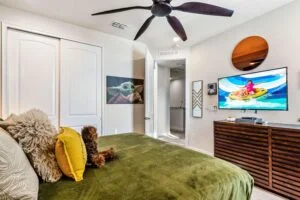
Our home has:
- Sound machines in every bedroom
- Blackout curtains in every bedroom
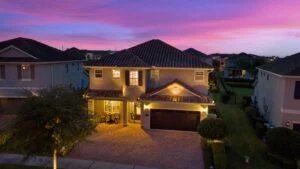
- Quiet side of community — no thru-traffic
- Private pool — no shared pool crowds
- Kitchen for safe food preparation
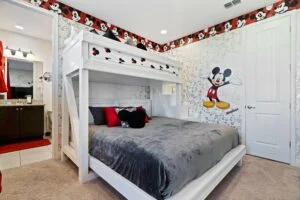
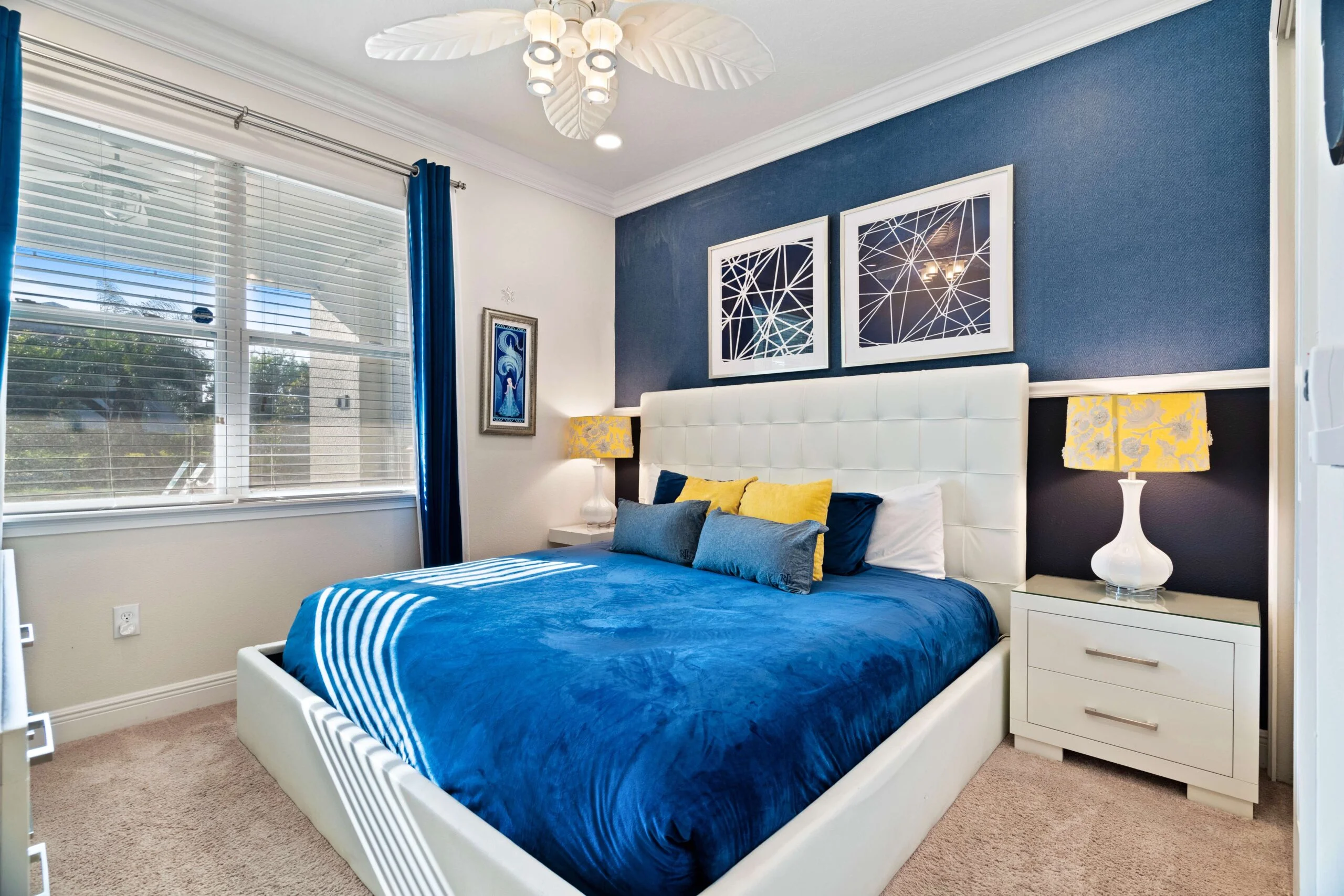
- Ground-floor Frozen bedroom for mobility or escape
Ground-floor sensory space
If your child melts down, they have a place to go — not a hotel hallway.
Booking Tips
- Book a vacation rental over a hotel for guaranteed space + quiet
- Tell the host about specific needs — we can prep items like extra sound machines or pack-n-plays
- Book extra days — build in rest days, don’t try to do 7 straight park days